
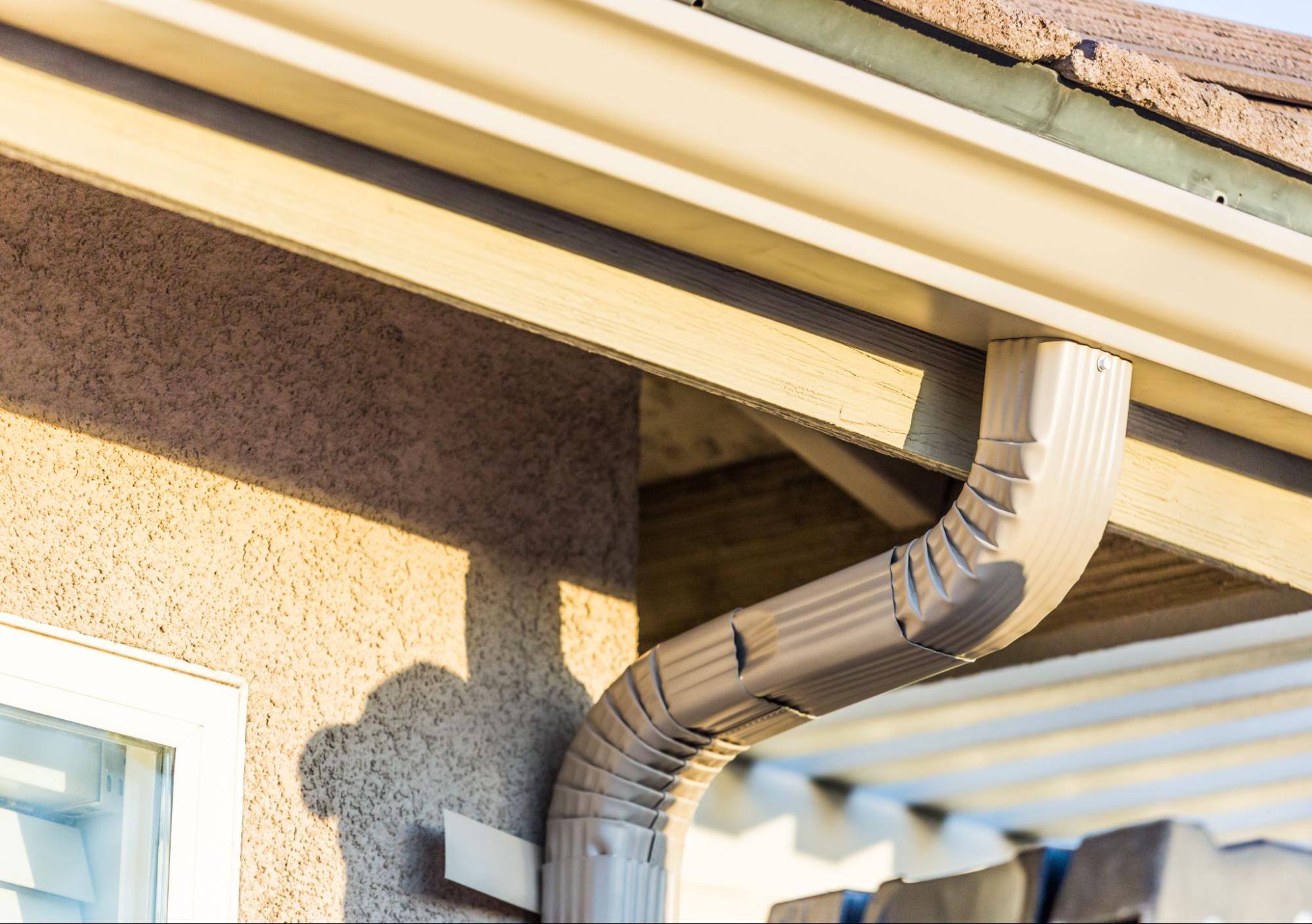
Florida’s rainy season is not a slow build. It can shift from sunshine to heavy downpour in minutes, and that pattern repeats for weeks.
Because rainfall often comes in intense bursts, your gutter system has to perform under pressure, not just “handle a little water.”
If it fails, the damage usually shows up quickly in the form of overflow, staining, and damp areas around the home.
In other words, gutters in Florida are less of an accessory and more of a protection system. That is why upgrading or repairing them before the rainy season is one of the smartest preventative moves homeowners can make.
As the rainy season approaches, many homeowners start seeing the same warning signs.
These issues are not random, they are usually the result of seams loosening, debris building up, or poor drainage pathways.
Common pre-season red flags include:
If any of these are happening, the next storms will usually make them worse.
This guide answers the question: are seamless gutters better in a Florida-specific way. Instead of general claims, you will see how each option performs against Florida realities: heat, humidity, sudden rain volume, storm winds, and debris.
By the end, you will know what to look for in your home, what problems each gutter type tends to create, and how to choose a system that holds up through the season.
Traditional gutters are typically installed in multiple pieces. Those sections are joined together using connectors, fasteners, and sealants.
This approach is common because it can be easier to transport and install, especially for smaller projects. However, Florida conditions can stress those joints repeatedly.
In practice, sectional gutters have more “interruption points” along the run, and those points are where problems often begin.
Sectional systems usually include:
Seamless gutters are formed as continuous runs to match your home’s measurements. They are typically fabricated on-site, which allows installers to create long, uninterrupted pieces with minimal seams.
The main joints you still have are at corners and downspouts, but long straight runs do not require seam connections the way sectional systems do.
That difference matters in Florida because it reduces the number of areas that depend on sealant and connectors to stay watertight year after year.
Seamless systems are known for:
Florida heat expands materials. Then rain cools them quickly. Over time, that cycle can loosen seals and stress joints.
In addition, Florida humidity keeps surfaces damp longer, which makes small leaks more damaging.
Seams tend to create:
The core difference is not just how gutters look. It is how many opportunities the system gives water to escape or debris to build up.
When homeowners see water problems, they often assume the gutter is “too small” or “just needs cleaning.”
However, leaks typically start at joints and connection points. Those areas are constantly exposed to pressure from moving water, plus sealant breakdown from UV and heat.
Leak-prone areas include:
Because seamless gutters reduce seams across long runs, they reduce the number of places where leaks can form.
Florida downpours can overwhelm a system if water cannot move quickly toward downspouts. When flow slows down, water rises in the gutter channel, and overflow begins.
Overflow is not just messy. It can dump water where you do not want it, especially near entryways and foundation edges.
Overflow is commonly caused by:
Seamless gutters do not automatically solve capacity issues, but they often support smoother flow because there are fewer internal edges and seam disruptions.
Even if a sectional system is sealed well at installation, seals do not stay perfect forever. Florida weather accelerates sealant wear.
Over time, resealing becomes common, and the homeowner ends up maintaining joints repeatedly.
Fewer joints means:
For heavy Florida rain, seamless gutters are often the stronger choice because they reduce leak points and support steadier flow. In a season where rainfall can be relentless, consistency matters more than “good enough.”
Storms in Florida often bring wind strong enough to shake gutter lines and stress fasteners. With sectional gutters, seams can become separation zones. Small movement at a joint can widen gaps, and that can lead to dripping behind the gutters or sections loosening over time.
Signs of storm-related separation include:
Seamless gutters tend to reduce separation risk on straight runs because there are fewer joints that can loosen.
Storm performance is not only seamless versus sectional. Installation quality plays a major role. Strong hangers and correct spacing help gutters resist vibration and pulling forces during wind events.
When comparing options, ask about:
Better fastening does not replace good gutter design, but it supports it. A seamless system with poor installation still fails. A well-installed system can handle storm stress far better.
Storm debris increases the chance of clogs and overflow. When debris accumulates, water flow slows, and gutters become heavier. That weight and movement can pull at joints and fasteners.
Storm debris commonly includes:
Seamless gutters often perform better in storms because fewer joints means fewer separation points.
Still, storm-ready performance depends on proper fastening, correct pitch, and a drainage plan that matches Florida runoff patterns.
Florida roofs collect more debris than many homeowners realize, even in neighborhoods that do not look heavily wooded.
Between palms, pines, oaks, and seasonal storms, gutters can fill quickly during the months when you need them most.
Debris you often see in Florida gutters:
This debris does not just “sit there.” It changes water flow and can trigger overflow.
When water cannot reach downspouts fast enough, it rises and spills over the edge. That spillover can cause staining, erosion, and damp zones near the home.
In addition, standing water mixed with organic matter creates buildup that is harder to remove later.
Clogs often lead to:
Sectional gutters tend to snag debris at seams and connectors. Those internal edges can act like “hooks” for pine needles and small particles. Seamless gutters have fewer interruptions, so debris is less likely to catch repeatedly across a long run.
However, neither system is maintenance-free. The difference is how quickly buildup starts and how often it creates flow problems.
Florida debris and humidity make clog prevention a real priority, not a minor concern. Seamless gutters often reduce snag points, which can slow buildup and help gutters drain more efficiently through heavy rain cycles.
When gutters leak or overflow, water collects near the base of the home. That can start as a small puddle and slowly become a bigger structural issue.
Over time, repeated pooling can erode soil and change the grade around your foundation.
Potential long-term effects include:
In Florida, where storms can repeat several times a week, these risks build faster than many people expect.
A gutter system only protects your home when runoff is directed away effectively. If water exits too close to the foundation, it can cycle right back toward the home during heavy rains. Drainage is a system, not a single component.
Runoff control often depends on:
Seamless gutters help here because fewer leaks means fewer random drip zones along the perimeter. When water movement is controlled, discharge becomes more predictable. That reduces the chances of erosion lines forming around corners or low spots.
If you want to protect the foundation, the goal is consistent water control, not temporary patching. Seamless gutters often support that goal better by reducing leaks and helping runoff move toward the right exit points.
Florida homes often have bright exterior finishes and strong sun exposure, which makes streaking and stains more visible. Sectional gutters typically show connectors at intervals, and those seams are where drips and staining often start.
Seamless gutters create:
This matters for homeowners who want the exterior to look maintained year-round, not only after a fresh cleaning.
Stucco and light paint show water marks quickly. Even a small seam drip can create streaks that run down exterior walls. Over time, that makes the home look older and can be difficult to clean completely.
Common staining patterns come from:
Because seamless systems reduce seam points across long runs, they often reduce drip-based streaking in those areas.
Many seamless gutters come in color options that blend with trim, fascia, or roof tones. While this does not change performance, it supports the overall finish of the exterior and can make the gutter system look intentional instead of added later.
Seamless gutters are often the cleaner-looking option, but the visual advantage is not only aesthetic. Fewer seams can also mean fewer drip marks and stains, which keeps Florida exteriors looking fresher through the rainy season.
Seamless gutters usually cost more initially because they are custom-made and require professional fabrication. However, Florida weather can make sectional systems more expensive over time due to recurring resealing and seam maintenance.
Costs that tend to show up later with traditional gutters:
When these repeat, the “lower cost” option becomes less attractive.
Florida gutters often need more frequent attention because debris and humidity accelerate buildup. Maintenance is not a dealbreaker, but it should be part of the cost conversation.
Typical maintenance needs include:
Seamless systems can reduce seam maintenance, but they still need routine care.
Upgrading often makes sense when the home experiences repeated issues that do not go away after cleaning or resealing. If problems return quickly, the system may be limited by design, size, or seam count.
Upgrading is often worth considering if:
In Florida, long-term value often favors seamless gutters because they reduce recurring seam-related repairs. When you factor in avoided damage and lower maintenance stress, the higher upfront cost becomes easier to justify.
Before the rainy season, a quick evaluation can prevent surprise problems during the first major downpour. Some issues show up only during heavy rain, so it helps to check after storms as well.
Look for:
After a strong storm, walk around your home and observe how water behaves. That real-world flow tells you more than a dry-day inspection.
Pay attention to:
If issues repeat through the season, patching may become a cycle. At that point, replacement can be more cost-effective than constant repair.
Replacement is often the better option when:
Rainy season preparation is not only about cleaning. It is also about identifying repeat failures early, so you can fix the cause instead of reacting during storms.
Not all gutters handle Florida rain the same way. Roof size, pitch, and runoff concentration areas affect capacity. That is why gutter sizing should be part of the quote discussion, not an afterthought.
Ask about:
Downspouts are the exit points. If too few are installed, water backs up even in clean gutters. Good placement balances flow across the home and reduces overflow.
A strong plan considers:
Because installation quality matters so much in Florida, it helps to ask what the contractor guarantees and how the system will be secured.
Clarify:
A seamless gutter quote should explain the system design, not just the price. When capacity, downspout strategy, and fastening details are clear, you can compare options more confidently.
Florida’s climate exposes gutter weaknesses fast. Heavy rain stresses flow and capacity, humidity accelerates wear, and storms test how well the system stays attached and aligned. Because seamless gutters reduce seams across long runs and typically support more reliable drainage, they are often the better choice for Florida homes.
That said, the best outcome depends on proper sizing, correct pitch, and a downspout layout that moves water away from the structure. If your current gutters leak at seams, overflow during storms, or pull away over time, upgrading to seamless gutters before the rainy season can be one of the most practical home-protection decisions you make.
Florida storms do not wait, and gutter problems usually get worse once the heavy rain starts. If your gutters are leaking at seams, overflowing during downpours, or pulling away from the fascia, it may be time for a more reliable solution before the season ramps up.
Rain Gutters Unlimited Corp provides seamless gutter installation, gutter replacements, and pre-rainy season inspections across South Florida, helping homeowners protect their roofline, walls, and foundation with a system designed for Florida weather.
We proudly serve:
If you want help choosing the right gutter setup for your home, schedule a quote or inspection with Rain Gutters Unlimited Corp and get ahead of the rainy season with confidence.
Our seasoned expertise ensures your property stays safeguarded against even the harshest weather elements.