
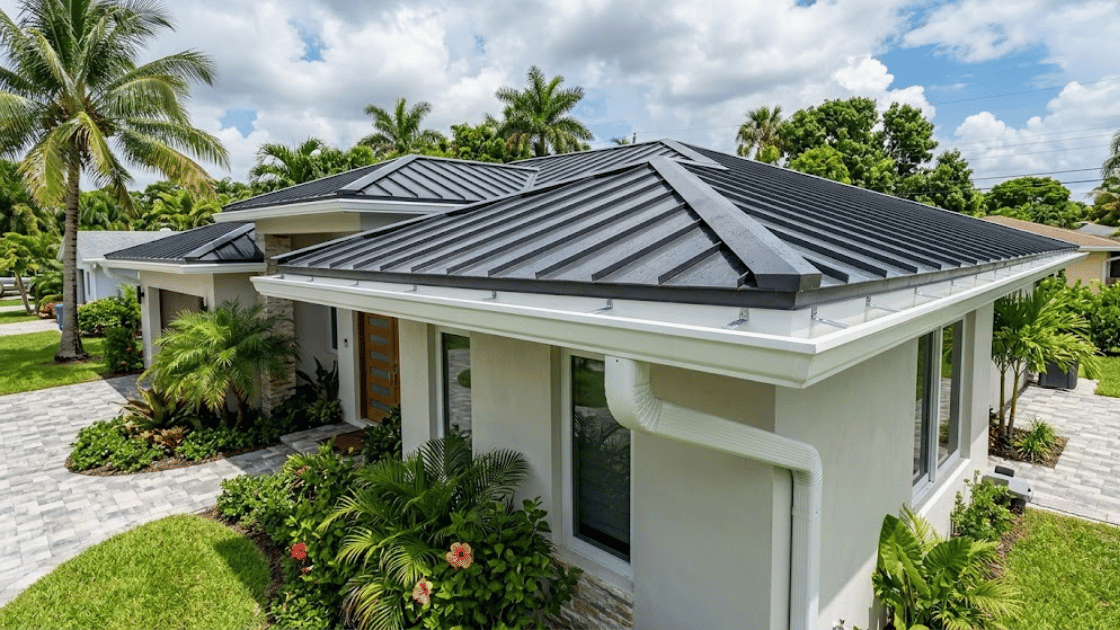
The absolute best option for South Florida properties is a 6-inch seamless aluminum K-style gutter system.
Because metal roofs feature a slick, smooth surface, heavy rain glides down them with incredible speed.
During intense tropical downpours in Miami, Dade, Broward, and Homestead, standard 5-inch gutters can easily be overshot by the fast-moving water.
Upgrading to a 6-inch high-capacity system provides 40% more water volume, ensuring your home can handle torrential downpours without overflowing.
Furthermore, choosing seamless aluminum ensures your drainage system can withstand local coastal humidity and salty air without rusting, cracking, or breaking under the intense Florida heat.
Selecting the right material is vital to prevent long-term damage to your house structure and ensure your drainage elements match the 50-year lifespan of a high-quality metal roof.
Lightweight, cost-effective, and completely rust-resistant.
Aluminum interacts perfectly with the constant thermal expansion and contraction of standing seam and ribbed metal roofing profiles without buckling.
Highly durable and structurally rigid, making it an excellent option for commercial buildings and multi-story residential properties.
High-quality systems like the 26-gauge Flamingo steel gutters are manufactured with specialized double-sided polymer coatings to resist scratches and extreme coastal corrosion.
A luxury choice frequently found on high-end custom properties in Miami and Broward.
While more expensive upfront, copper offers a 50-year lifespan, develops a beautiful natural patina, and delivers top-tier structural durability.
The geometric shape of your drainage channels directly impacts how effectively they carry water away from your building foundation.
The K-style profile is the industry standard for residential properties across South Florida.
Featuring a flat back that mounts flush against your fascia boards, they provide a clean look that mimics crown molding.
Because of their deep, wide design, K-style profiles hold a significantly larger volume of water than other shapes, making them an excellent match for the steep pitches often found on regional metal roofs.
If your home features a traditional Spanish tile hybrid design or a contemporary standing seam metal roof, half-round or box gutters are great alternatives.
Half-round systems feature a smooth interior that naturally reduces debris buildup and clogs.
Custom-fabricated box gutters provide an ultra-modern aesthetic and are highly favored for commercial warehouses, strip malls, and large residential estates needing maximum drainage capacity.
To prevent water damage, soil erosion, or a complete system failure, your gutter contractor must adhere to a few local structural installation guidelines.
Gutters must be attached firmly to the structural fascia board behind the roof line, never directly into the metal panels.
Piercing the metal panels can void your roof warranty and introduce immediate leak points.
When conflicting metals touch, a fast-acting corrosive chemical reaction occurs.
Installers must use compatible stainless steel or aluminum hidden hangers and heavy-duty hardware to keep the metals separated.
Before anchoring any system, your fascia boards must be fully inspected for wood rot.
South Florida’s high humidity can compromise unprotected wood, and heavy rain loading on weak wood will cause gutters to sag or rip away.
A metal drip edge or eave trim ensures fast-flowing water is cleanly directed off the roof panels and straight into the center of the gutter channel, rather than seeping backward behind the system into your soffits.
Between seasonal storms and native landscaping, South Florida gutters deal with constant environmental stress.
Local trees like live oaks, slash pines, and coconut palms drop leaves, needles, and heavy fibers all year long. When these materials land on a smooth metal roof, they wash right down into the channels, causing immediate blockages.
To avoid climbing a ladder multiple times a year, pairing your system with stainless steel micro-mesh gutter guards is highly effective.
Micro-mesh screens block tiny pine needles and organic matter while allowing massive sheets of water to drop freely into the channel.
This simple addition eliminates standing water, minimizes your regular maintenance schedule, and keeps mosquitoes from breeding around your foundation.
Every local neighborhood comes with unique structural and environmental factors, from the windy coastal fronts of Miami and Broward to the wide, storm-exposed residential areas of Homestead.
Matching the perfect width, thickness, and placement requires a dedicated local professional.
Rain Gutters Unlimited Corp can help to decide the best gutter solution for your residency or commercial property.
Our expert team specializes in custom seamless styling, precision slope leveling, and heavy-duty hanger placement designed specifically for local metal roofing systems. Contact us today to secure a long-lasting, storm-ready drainage solution tailored to your home.