
When a typical afternoon downpour hits Miami-Dade, Broward, or Homestead, a properly maintained gutter system does an incredible job of channeling thousands of gallons of water off your roof.
For many South Florida homeowners, the answer is a
Because our region sits on a notoriously high water table and features dense limestone, oolite rock, and sandy soils that saturate rapidly, simply catching rainwater isn’t enough.
Therefore, to truly protect your home’s structural integrity, you must combine your high-capacity seamless gutters with a comprehensive ground drainage strategy.
Many gutter installations end with a standard elbow that dumps all the collected roof water right at the base of the home.
During a torrential summer thunderstorm, a 2,000-square-foot roof can shed over 1,200 gallons of water for every single inch of rainfall.
When this massive volume is concentrated into a few small downspout exit points, it creates the “Downspout Dump” effect.
In South Florida, this concentrated dumping leads directly to severe property damage due to our specific geography.
Miami homes are built on concrete slabs; when water repeatedly pools against the edge of the slab, it saturates the soil beneath, causing the ground to shift, settle, and eventually crack your foundation.
When water cannot drain away from the ground fast enough, it pools upward, causing high humidity and splashing that rots the lower perimeter of your home’s exterior walls.
Torrential downspouts wash away mulch, expose plant roots, and carve ugly trenches into your lawn.
Because the Miami water table is so close to the surface, this water cannot naturally sink into the ground, leaving stagnant pools that become prime breeding grounds for mosquitoes within 24 to 48 hours.
To prevent your yard from transforming into a lake this summer, your gutter system needs to move water away from your home’s perimeter.
This is achieved by transitioning roof drainage into advanced ground-level or below-ground rainwater management systems.
A French drain is a highly engineered sub-surface drainage system. It consists of a sloped trench lined with geotextile fabric, filled with perforated PVC piping, and surrounded by clean, crushed granite or river rock.
When your seamless downspouts are adapted directly into an underground solid drain line, the water travels safely away from the house into this perforated trench.
The water then slowly and safely filters through the gravel and disperses into the surrounding soil over a massive surface area.
This is an ideal solution for low spots in Homestead or Broward lawns where water naturally pools.
For areas where your roof runoff meets hard surfaces like concrete driveways, pool decks, or patio walkways, a catch basin system is essential.
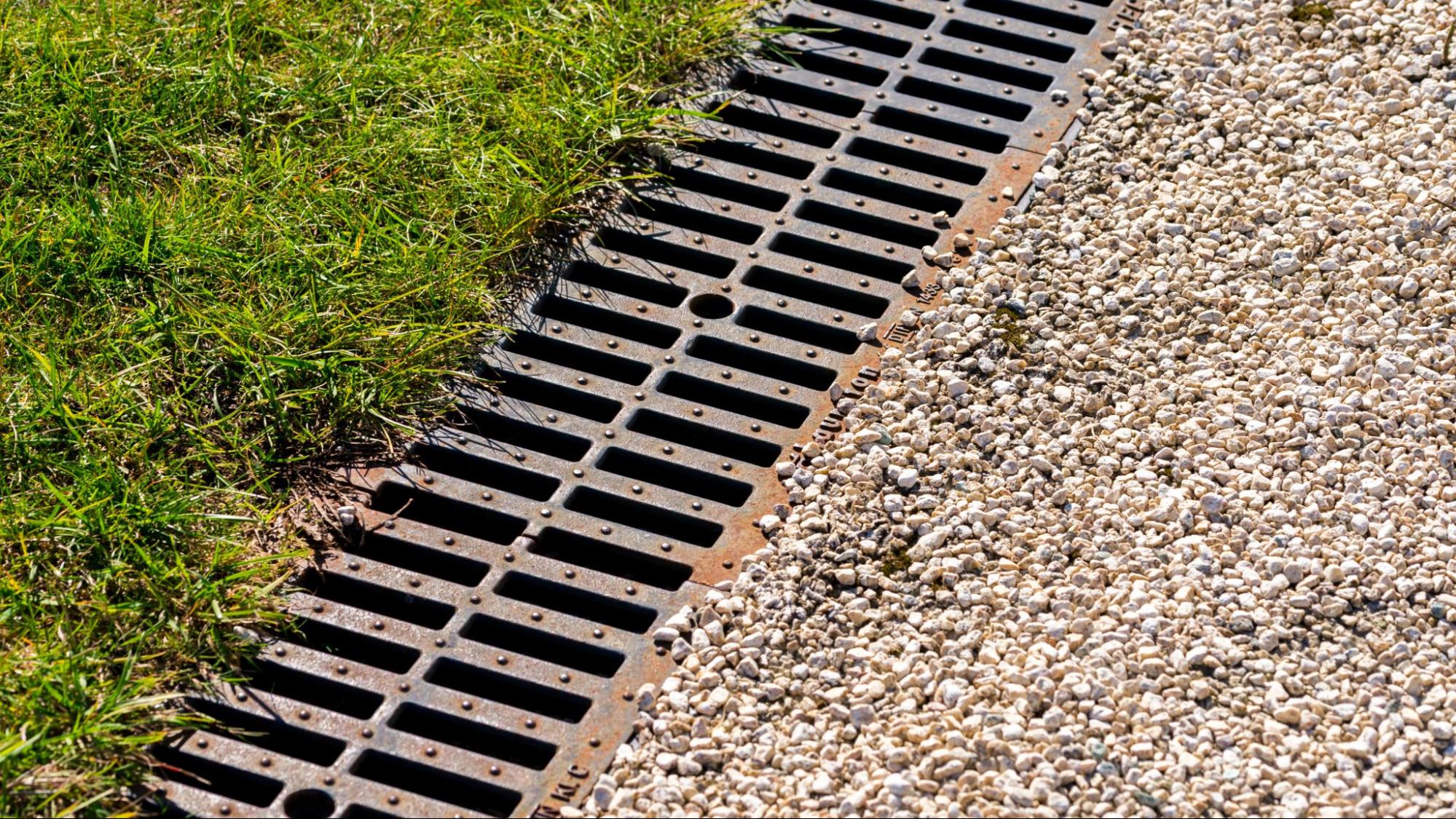
A catch basin is a subterranean box topped with a heavy-duty grate placed flush with the ground. It collects both the direct downspout water and surface runoff.
The water travels through a smooth-wall underground pipe beneath your lawn and terminates at a “pop-up emitter” installed near the property line or street curb.
The emitter cap remains securely closed to keep lawn debris, iguanas, and rodents out, but automatically pops up under hydrostatic water pressure during a storm to discharge the water safely into the municipal swale.
If underground digging is restricted due to extensive tree roots, buried utility lines, or strict local HOA regulations, above-ground management is the next best line of defense.
Standard 2×3-inch downspouts restrict flow, but upgrading to commercial-grade 3×4-inch downspouts drastically increases water velocity.
Pairing these large downspouts with heavy-duty, color-matched aluminum extensions that extend at least 3 to 5 feet away from the concrete slab ensures the water sheds toward the street or natural property slope.
These are securely anchored with hidden brackets and fitted with structural splash blocks to diffuse the water’s impact force, preventing soil erosion entirely.
Ultimately, managing storm water is about understanding the entire loop, from the peak of your roof down to your property line.
You cannot solve a severe South Florida water problem with half a solution. Investing in custom, high-capacity 6-inch seamless aluminum gutters combined with professional subterranean drainage is the single most effective way to eliminate the risks of structural foundation failure, mold growth, and soil erosion.
At Unlimited Rain Gutters Corp, we understand exactly what Miami, Dade, Broward, and Homestead properties face every summer.
Our dedicated team of specialists provides encompassing solutions that manage water flow, ensuring your home remains protected and your yard remains dry. We evaluate your property’s specific needs, incorporating the full spectrum of necessary services to engineering a customized, lasting solution.
Do not wait for the summer tropical systems to wash away your landscaping and threaten your foundation.
Contact Unlimited Rain Gutters Corp today to schedule your comprehensive perimeter evaluation.
Gain the ultimate peace of mind this storm season, knowing your property is permanently protected by our expert care.